The commune of Salé intensifies its efforts to circumvent the effects of stormy rainfall

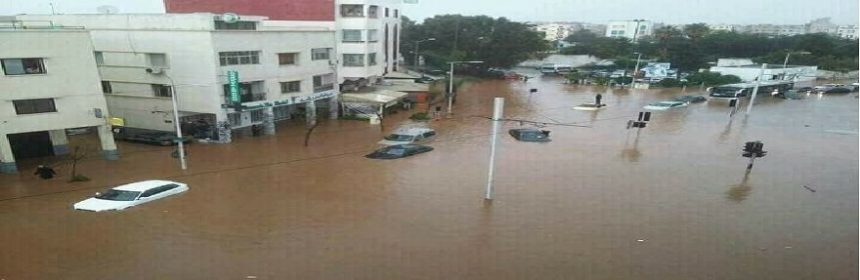
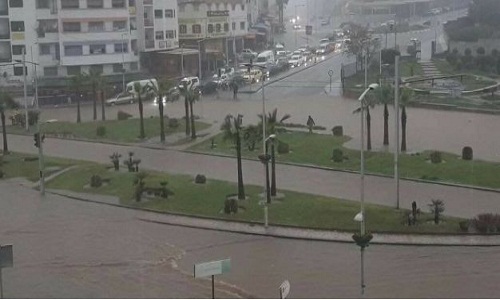
Following thunderstorms in the town of Salé, causing widespread flooding, this Thursday, February 23, 2017, Mr. Abdellatif Soudou, vice-president in charge of works and urban development, affirmed the taking of all necessary measures In order to circumvent the difficulties relating to this inclement weather.
To this end, Mr. Soudou informed that Mr. Jamaâ El Moâtassim, President of the commune of Salé, is currently with the Governor of the city of Salé and the other departments responsible for a Crisis Staff, to cope with these heavy rainfall. He also pointed out that REDAL’s technical teams were immediately mobilized and dispatched to the site for the evacuation of rainwater.
Moreover, according to a video posted on his Facebook account, Mr Soudou showed that the heavy rains in the city of Salé were phenomenal, given their intensity which reached 70 mm in less than four hours. He also pointed out that the city of Salé has not experienced such bad weather for 20 years.
He therefore pointed out that all the vehicles in the city, whether related to urban planning or cleanliness, had been mobilized to help the inhabitants; While insisting on a decision to use all available means to monitor the impact of these rain showers.

The Borough of Laâyayda houses the National Cycling Race

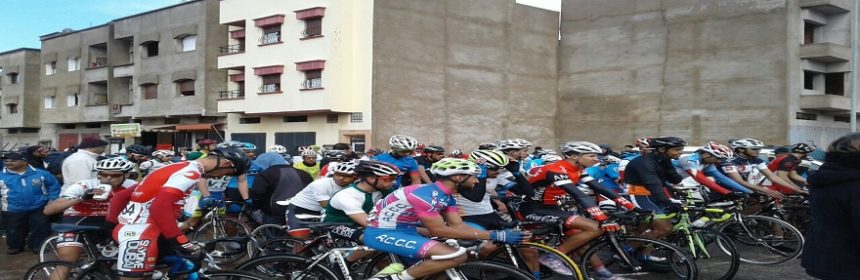
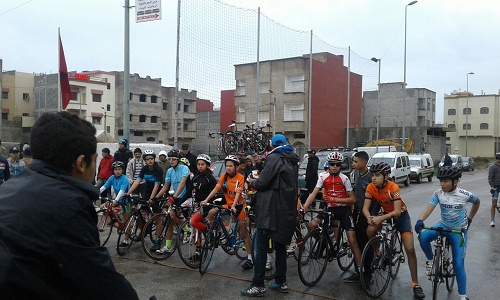
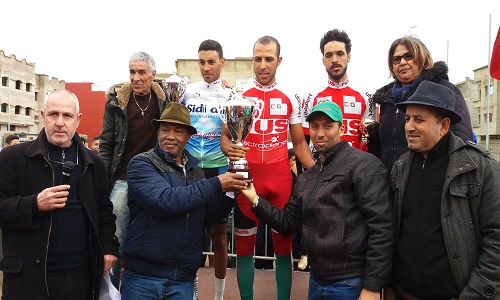
The Sports Association of Salé Cycling Section organized, under the auspices of the Royal Moroccan Federation of Cycling and with the support of the District Council of Laâyayda, a National Cycling Race, on Sunday, February 19, 2017.
Indeed, the phases of this cycling itinerary took place on a closed circuit, in the subdivision Sidi Abdellah located in the district Laâyayda. This race, which involved 186 cyclists of all categories and all ages and from 35 clubs from various regions of the Kingdom, has been appreciated by a large audience including residents and cycling fanatics.

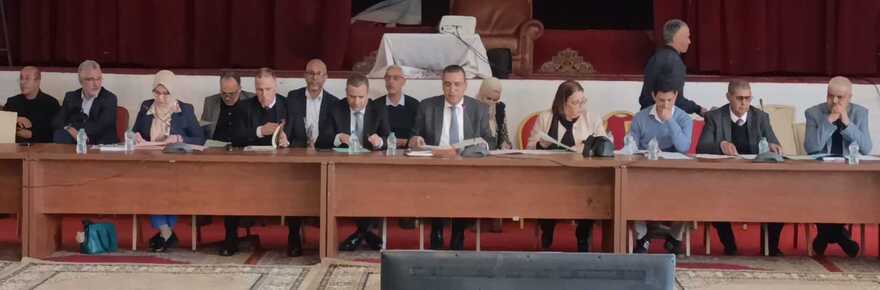
The Borough Council of Laâyayda organizes the signing ceremony of the Charter of its advisory committee

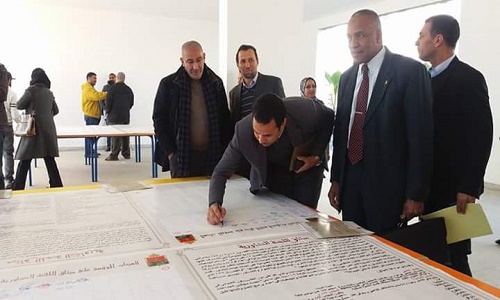
On 24 December 2016, the Laâyayda Borough Council organized, in collaboration with civil society and the Center for Local Development Support, the signing ceremony of the Charter of its Advisory Committee.
On this occasion, Mr. Ezz Al-Arab Halimi, chairman of the borough council, stressed the need for the broad and effective contribution of associations, residents and other stakeholders in the proposal, monitoring and evaluation of projects which the Borough Council decides to make or contribute to.
The purpose of the Advisory Committee, according to its Charter, is to establish dialogue between the various actors in the borough’s territorial area, to mobilize human potential and social capacities for sustainable human development, facilitating the Borough’s development proposals, consolidating the principles of good governance, and opening up local, national and international experiences to gain experience.
The ceremony was attended by a number of representatives of active associations in the Borough of Laâyayda, some representatives of political parties and researchers in the field of development, and a large number of residents of the borough.

The president of the commune of Salé has reserved a warm welcome to the team of the Sports Association of Salé Basketball Section after his victorious return.

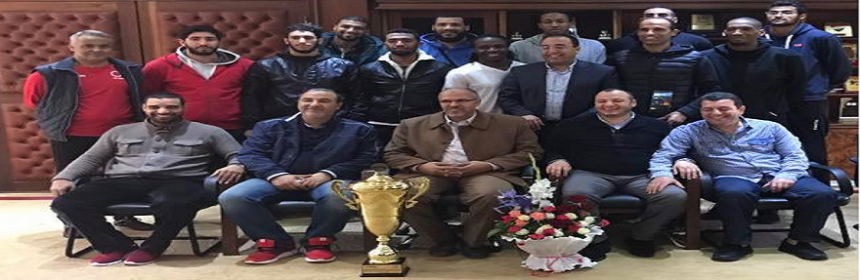
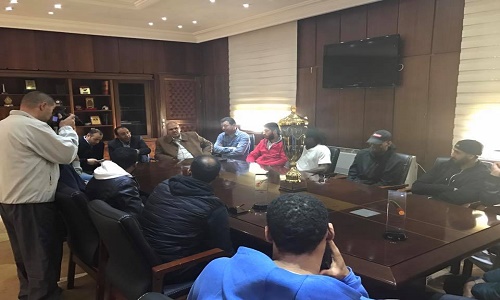
Mr Jamaâ El Moâtassim, president of the commune of Salé, warmly welcomed the members of the team of the Sports Association of Salé Basketball Section on his return to the motherland Sunday morning of 26 February at the commune headquarters; after winning the Dubai International Tournament held in the United Arab Emirates during the extended period between 17 and 25 February.
The Sports Association of Salé triumphed in the final of this international championship, winning the title for the first time in its history, after its victory against the Lebanese team of Riyadi of Beirut by the score of 84-73. This tournament was attended by 7 teams representing 4 countries: Morocco, Egypt, Philippines and Lebanon.

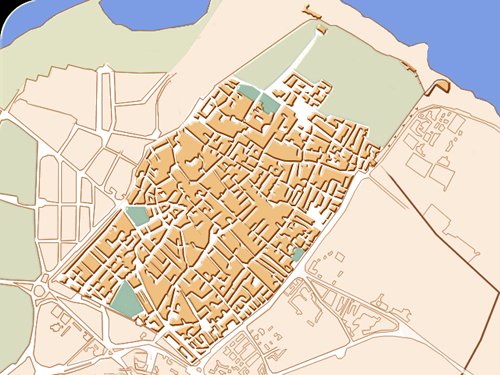
The old town

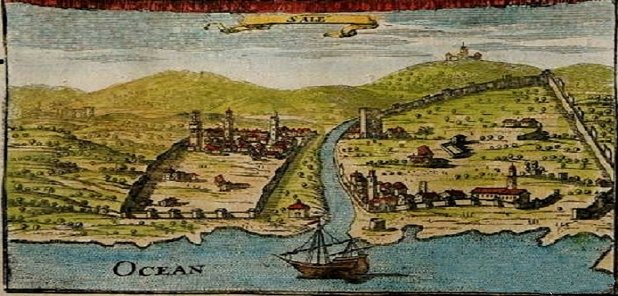
Salé was founded by the dynasty of Banu Ifran during the 10th century before it was taken over by Almoravids in 1028.

During the 11th century,thanks to its strategic position on the road connecting Rabat and Fès, the town knew a real prospering period during the reign of Al Mohads and later Banu Marin (14th century).

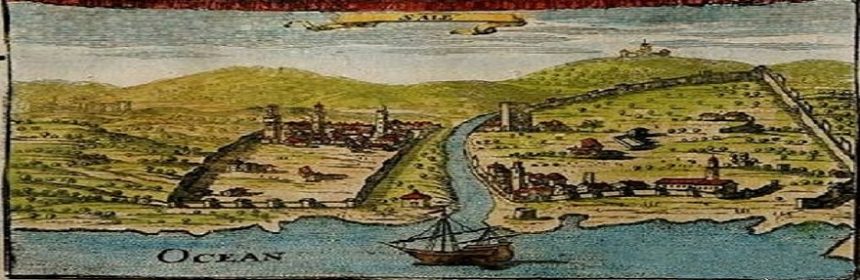
During the 17th century, the mass influx of Moslems and Jews who were expelled from Spain gave the city (the old Salé) a new vigour and put it in intensive rivalry with the neighbouring Rabat (then called the New Salé).At that time, Salé was famous for its dynamic maritime activity. The new migrants from Andalusia used it as center for their piracy activities. During the 18th century, Salé became a business center which allowed the extension of its influence to remote regions.

By the19th century, this dominant business role of the city ended and consequently became a city closed on itself. However, it remained during the 19th century and the foreign protectorate era a center of cultural movement as well as a base for the national movement against occupation.

While the city of Salé was considered as a powerful maritime force and being the cradle of the Arab-Andalusian culture, it is also considered as home of some prominent families, famous scholars and leading  personalities in resisting movement against occupation .The various historical monuments in the city still witness its glorious past.

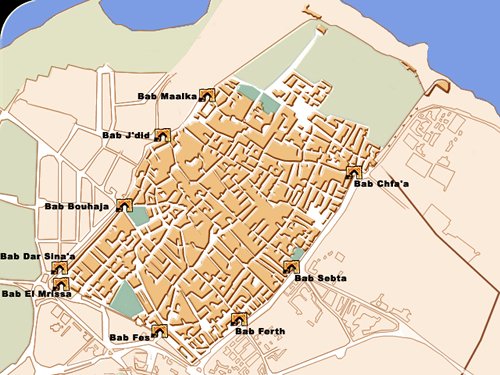
Gates of the old city:

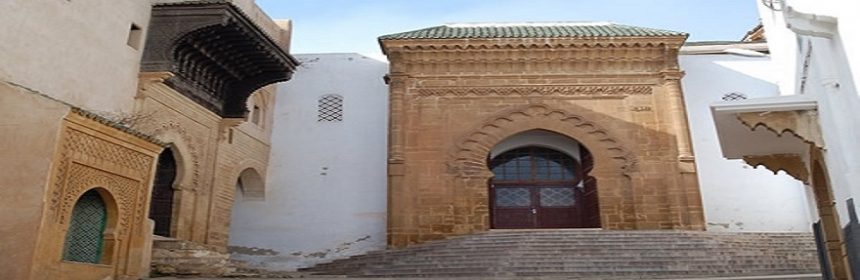
  • Bab lemrissa, it is one of the biggest historical gates in Morocco. It was built by the Marinid Sultan Abu Youssef Yaakoub bin Abdelhaq during the period between 1270-1880, and the Sultan himself participated in the construction work. According to Nassiri, an architect called Mohamed bin Ali, who came from Sevilla, supervised the project of a fortified port that could be also used as shipyard and connected the city with Abu Regreg river.This port has a rock façade decorated with beautiful ornaments, calligraphy and artistic motifs in the shape of flowers. The port is fortified with two rectangular towers with a prominence of 2.20 meter and 3.50 meter wide and an arcade in the form of a horse-back, its opening is around 9 meter wide,and its summit is 9.60 meter high even if the level of the soil got higher with sand deposits.
  • Bab Sebta, located at the northern part of the city, it is considered as one of the most impressive gates for visitors of Salé. Characterised by its huge tower from which the city affairs were managed during the reign of Abdelhaq Fenech (1757-1738). It was given this name because people had to use this gate to reach the route leading to Sebta.
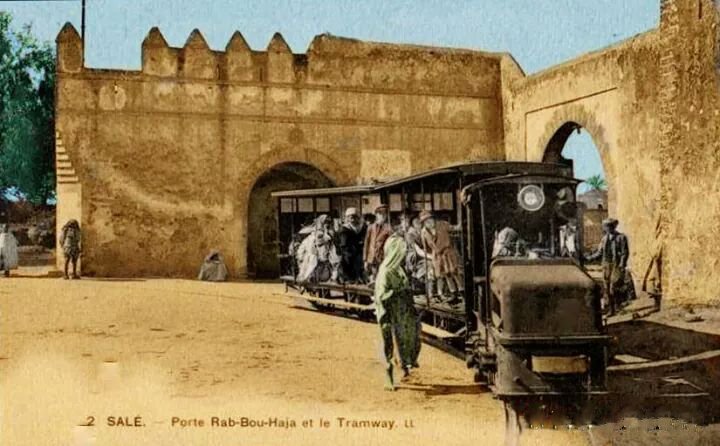
  • Bab Bouhaja, a large gate which was destroyed during the 60s. It is named after the venerable holy Andalusian man Sidi Ibrahim Bouhaja Randi who kept  the hermits monastery (Zawiya Nossak) during the 14th century.

  • Bab Dar Sinaa (Shipyard gate), one of Salé historical gates. It is known as Bab Alfaran  (oven gate) or Bab Antar (Antar gate) because it contained an arsenal and weapons factory for the pirates. It was built in 1261 by the Marinid Sultan Abu Yousuf Yaakub Bin Abdelhaq under the supervision of the Andalusian architect Mohamed bin Haj Al Ichbili.
  • Bab Chofaa, one of Salé historical gates. Characterized by the marvellous and harmonized design. It is 5 meter high and contains Bab sab’a banat (Seven Girls Gate).
  • Bab M’alqa, one of Salé historical gates, it overlooks the cemetery and the sea. It is different from other city’s gates neither in form nor in size. It is a small gate which still has two wooden sides. Its importance was drawn from the fact that it was where the Sultan stayed during his visit to some places in the city.
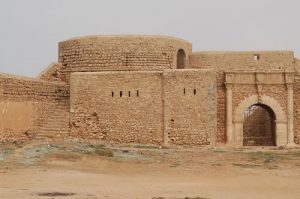
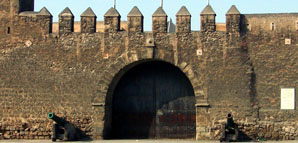
  • Bab Al Khamis, located  at the Eastern side of the city. This name replaced the old name of Bab Fès (Fès Gate), it was the only entrance to the city from this side before it was definitely closed in 1991. It is a historical monument in Salé with two old canons. The entrance to the city from this side is reduced to a small side gate.
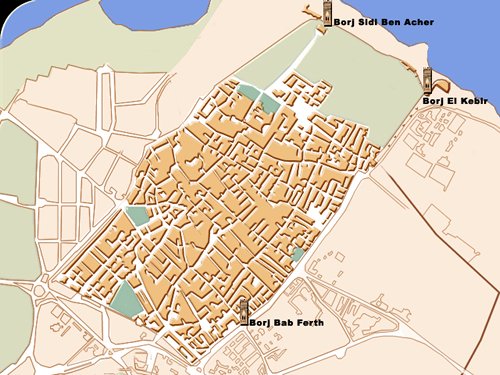
Towers of the old town of Salé:

  • Borj Bab Sebta, it was built by the ruler Abdelhaq Fenech in 1738. It is the place from where the city had been ruled.

  • Borj Domoue, or the old Seqala. It was built in 1759 by the sultan Sidi Mohamed bin Abdellah, It contains canons made of bronze. It is also called borj (tower) of Sidi Bin Acher.
  • Borj Rokni , it is also called Al Borj Al Kabir (the Big Tower) or the New Seqala. It was established in 1853 by Abu Al Fadl Abdel-Rahman ibn Hicham.
  • Borj Al Mellah, located near Bab Lemrissa.
  • Borj Al Mothamin, it was so called because it consists of 8 sides.
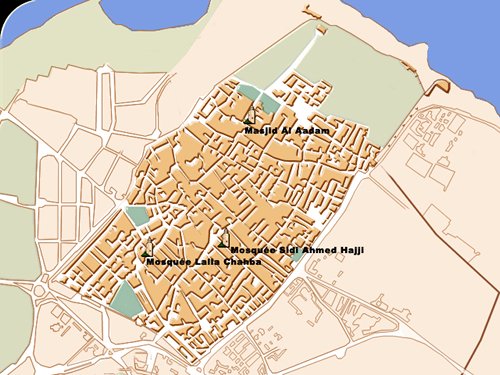
Mosques of the old town:

  • The Great Mosque, the Great Mosque or what is known to the inhabitants of Salé as the Jamaa Lkbir (large mosque) is considered as a spiritual and scientific monument which characterizes this city. It is one of the greatest mosques in the Islamic world. It had been extended and reconstructed during the reign of AlMohads Sultan Abu Youssuf Yaaqub bin Youssuf Al-Mansur in 1196. The first scholar to be mandated to give the Friday preach during the reign of Yaaqub Al-Mansur was Justice Abu Mohamad Abdullah Ibn Soleiman AL Anssari, judge of Salé and Ribat Al-Fath. The Great Mosque was built on a vast surface exceeding 5070 m2, which covers a diamond-shaped square containing high walls with two praying rooms and three courtyards and many suites. It has the same design as Al Mohad mosques of comparable value of other great Islamic Mosques with its high pillars and different arcades and good design.

  • Ashahbae Mosque, the second mosque which was built in Salé by Al Moravid Sultan Youssuf  Ibn Tachafin during the second half of  the 11th century. It was restored in the middle of the 20th century.
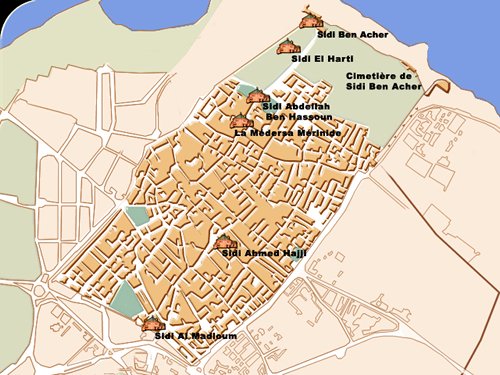
  • Sidi Ahmad Hajji Mosque, sultan Mulay Ismail ben Ali Sherif ordered to build this mosque named Sidi Ahmad Hajji in the area of the large market in the old town, he was among the Righteous of Salé, he was also famous for being an ascetic and for participating in the liberation of the Mehdia fortress from the Spanish in 1681, he was a follower of the Gazullah way.
The shrines of the the ancient Sale town:

Salé town was famous for the presence of many corners and places of worship(zawaya wa ribatat) , and the most important corner in the town during Bani Marin age was the corner of the pious which was built by Abu Inan for strangers and visitors.

Ancient Salé includes now a large number of righteous pious people , ordinary people feel confused about some of their names. Also, their shrines get different degrees of interest and organization.

Some of them are well-known on the national level like the shrine of the righteous pious Sidi Abdullah Ben Hassun, whose name is associated to the convoy of candles. And the shrine of Sidi Ahmed Ibn Achir, who is famous among ordinary people by his capacity to heal visitors who suffer from epilepsy and mental diseases .There are corners which have seasonal activities especially in the ceremony of the birth of the prophet.

The majority of shrines in Salé are deserted places which poor and destitute people take as a lodging, others are not known except as names for streets.

The first corners and shrines in Salé are found in three large centers which  are Talaa, Zenaata, and Leblida. These neighbourhoods were the core of the city during the age of Bani Achara. Also the most ancient shrines are there. When the Almoravids came, the city grew larger and they built Mosque Achahbaa. And at the age of Almuwahhidin, Burmada was built and they built the greatest mosque on the remains of Mosque Bani Al Achara. Yet part of these remains included the oldest righteous man of Salé who was Sidi Abdelhalim El Ghemad, who died in 590 Hijri/ 1139.

During the Marinid age, more shrines appeared in Talaa, Zenaata and Bab Hssain. The reason behind that was the Marinid School which was built by Abu Elhassan in the year 1430. Besides, the greatest mosque  which was the centre and the core to all students. Since the age of Bani Al Achara, judges and scholars used to give lessons. The attention of Abi Elhassan helped in that, so he brought necessary water for ablution to the school and the mosque through the arcades of Salé.

Shrines and corners also spread in Bab hssein when Abu Anan built the school which became a hospital.

The geography of shrines was limited to this site until the 16th century, when Sidi Abdullah Bin Hassun came from Salas, versions refer to unanimity he got from people and the righteous people  be them alive or dead, and he was appointed a Sultan on them in Salé. Among the righteous of   Talaa Sidi Muhammad Mfadel 1071 Hijri, and Sidi Ahmed Taleb 1072 Hijri.

The last of Sale’s righteous people to die was Ahmed Hajji 1103 Hijri, and his son Abdullah Eljazzar 1122 Hijri and Elhassan Elaydi 1131 Hijri. But as to the oldest among them outside the walls, we have the shrine of Sidi Bel Abbas 540 Hijri/1145, who chose seclusion after he donated all his property. His shrine was built two centuries after his  death by an order from Abu Anan, and was restored in the age of Moulay Ismail. The second was Abu Moussa Doukkali(died in 550 Hijri), he was also isolating himself , ate sea fish and herbs . At first, he lived in the” hotel of oil” in his time, which became a school and a hospital at the age of Abu Anan, then it became a house for the judge after the first world war. Abou Moussa Doukkali died in Riadh Bani Achraa, then Melala Bent Ziadat Allah took his ashes after one week and built on them a huge shrine, which was restored after five centuries during the age of Moulay Ismail.

Corners (zawaya) spread in Sale at the beginning of 19th  century, they are branches of national corners and ways. The sheikhs of some of them came from outside Salé , and were strongly attached to them like zawia Touhamia in ESSAF, which was founded at the age of Sidi Mohamed Ben Abdullah. The origin from Touhama is from Wazzan. The first one who came from this family to settle in Salé was Moulay Ibrahim from a sign of the righteous pious Sidi Elhaj Laarbi Elwazzani.

Among the Zawaya, Whose headquarters dates back to the 6th century /12th , Zawiya Darqawiya. In the origin it is the shrine of the righteous pious Abu Ali Chrichi who used to cry a lot. Then it moved to the followers of Moulay Ahmed Seqalli El Fassi in the Marinid’s age who built the Zawiya, then it moved in the 19th century to the followers of Moulay Larbi Darqawi.

Among the Zawaya which were recently built in Salé, the Kettani Zawiya. It was designed and built in 1902 by the founder of the Ahmadi Kettani way Sidi Mohamed Ben Abdelkbir Elkettani, which was originally a special luxurious house of Ben Said family.


(Information about Zawaya and shrines is taken from the website of the local council of Sale prefecture.)

History

Salé is one of oldest cities in the Islamic Maghreb, it was founded around the beginning of the 11th century by Banu Achara dynasty which was under the sovereignty of Banu Ifran. It is well known that this dynasty had made of the region of Shellah a staging ground for it in fighting the Berghouata Emirate, which deviated from Islam, without achieving its total eradication. It seems that the city controlled the territory of Shellah and a part of its population after expelling the Berghouatans and pushed them towards the south-east region.

Given the power and wealth of this clan as well as its care for science and literature, their palace court attracted writers, ordinary people from the surrounding areas and even from Andalus. This preliminary effort led to the establishment of a residential area known as Blida. In a short period of time, another wave of migrants came from Zenata region and Andalus which remarkably contributed to expanding the core territory of the Emirate.  Banu Ifran built the Zenata neighbourhood in the north-east side of the city. Later the Andalusian clan of Bani Khayroun, newly settled in the city, built the new neighbourhood,called after them, which is of Khyar Alley.

Al-moravids dynasty invaded the region in 1073, they eradicated both the Emirates of Berghouata and Banu Ifran, however they allowed Banu Achara to keep their previous privileges and they granted the member of this clan, exclusively, the judiciary function. During their reign,the Moravids built the Shahbae Mosque where the Friday preaching was given. Almoravids contributed in fortifying the defences of the city enclosing it with a wall made of stones and gates especially the ones which open to the routes to Fes and Ceuta. 
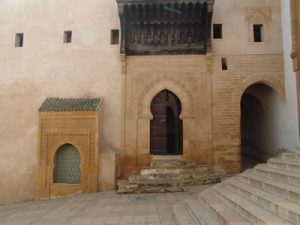
When Almohads came to Bouregreg river mouth in 1132, The kalifate Abdelmoumen ordered the destruction of the wall south of the city to make its control easier. And during his reign Salé joined the revolution led by Ibn Hud Al-Mezi, but he succeeded in regaining power over the rebelling regions and Salé enjoyed a great prestige during his reign.

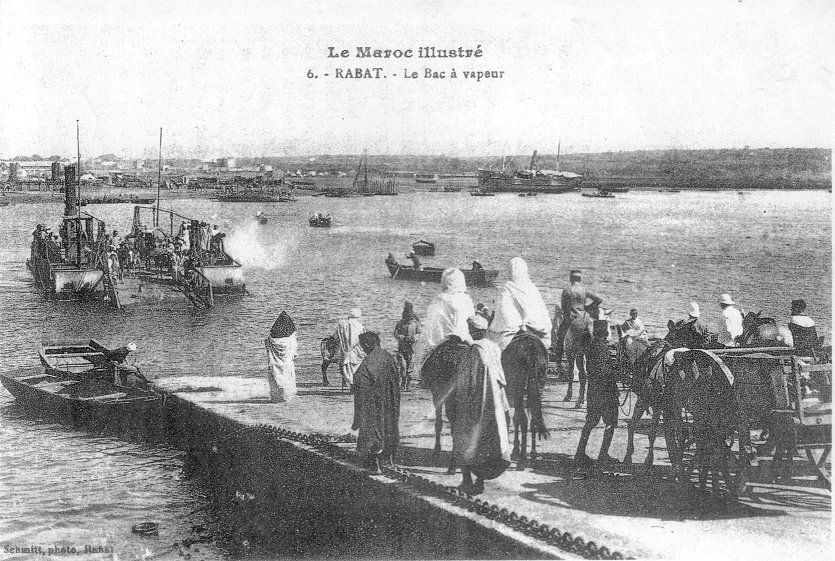
During the reign of Yakub Al-Mansur, the third Kalifate of Al-Mohads dynasty, Salé received a special interest from him. The great Mosque, the biggest in Morocco then, was built in 1196 and an interior part of it was devoted to teaching Quran and Hadith. The outstanding Mosque of Dawud with its peculiar unfinished minaret in Bu Rmada neighbourhood dates back to that period of time. The following year saw the construction of a new neighbourhood under the name of Talaà connected to the bank of Rabat with a ten-meter wide bridge.

Salé had played a significant role in Al-Mohads history. With Rabat, it was where the Kalifates of this dynasty settled for months and prepared their campaigns towards other regions in Mghreb and Andalusia. Both cities profited from these stays in terms of efforts made in urbanization. This crucial role had also made Salé a target of many rebel groups. One of them is Ibn Waqarit, an Al-Mohads Sheikh, who joined Ibn Hud who led rebellion in Andalusia.
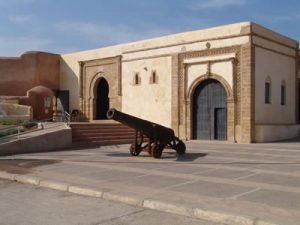
The entry of the Marinid Sultan into Salé was the beginning of a special relation between the city and the members of the reigning family thanks to the monumental accomplishments realised by them which still survive and  remind of the many and varied manifestation of civilisation that prevailed in Salé. The Marinid made of it a centre of one of the nine Moroccan provinces, built its Southern wall and made the Shipyard at the south-east corner an extension of it. They also established the Talaà School, the Ajiba School and a Zawiya (monastry) for hermits, in addition to two small mosques. Another unique monument built by them was the arcades wall with a water canal on top of it to bring water from the Maamora marsh.

The situation of the Marinid dynasty had not only positive aspects but also negative ones. Their defeat against the Christian fleet in 1341 marked the beginning of the decline in the city activity related to the flourishing Jihad passion in Andalusia, and lurched gradually backwards in importance. This could be seen in tales found in historical references: unlike in the previous eras the Sultans stopped to settle there for long periods, urbanisation stagnated since the death of Sultlan Abu Inan. Worse than that, their presence in the city was driven only by fighting on the reign. Like the rest of the country, Salé had been suffering from a deep crisis under the leadership of Sheikh Abu Zakaria Yahya Al-Wattasi who swore allegiance to the Emir Abdulhaq, the last Sultan of the Marinid dynasty.

In spite of the return of political stability in Morocco, after the Assaadi dynasty took power, their reign remains to be a vague period in the history of Salé because of the scarcity of references, except for sporadic hints to their care for ship building in the Shipyard, the restoration of the Bab Mrissa Arcade by the king Abdel Malik Assaadi and some general briefings on the situation of Salé during the reign of Assaadi dynasty. As Assaadi state entered in a period of disruption with multiple fightings between the emirs, who had bad reputation, on the reign it was noted that Salé was practically under the reign of the kingdom of Marrakesh and managed by a representative of Assaadi authority from Al Mohads Kassabah at the southern bank. It is also noted that the city suffered from various manifestations of the country s political aspect especially after the death of the Sultan Al Mansur. Under these circumstances the role of the Suffi leaders surfaced again. The Sheikh Hassoun moved to Salé and settled in it and had important effect on the stakeholders in the city and subsequently extended to other neighboring regions. The mujahid Mohamed Layachi Maliki, who came from an ancient decent family, was one of his student. He withdrawed towards Sale in 1615 and stayed there until he got the allegiance, obedience and support of its inhabitants. However his relations with the Andalusians passed through difficult periods ended by fighting them with the assistance of the British.

The fightings started in 1631, and it seems that the battles against the Andalusians had not achieved the expected results, this explained by the long duration of the war (for many years) where alliances changed sometimes. The Andalusians, for their part were not sitting idle: They initiated attacks to control Kassabah and expulsed its population towards Salé. Which led to the besiegement of Rabat again by the forces of Layachi who ultimately was assassinated by the Khalt tribe who were accomplices of  Dellaís and the Andalusians.
 

The Dellais seized the opportunity of the end of  Layachi to extend their influence on the mouth of Ab u Regreg river. Muhammad al-Hajj ad-Dila’i, appointed his son Abdullah as Emir of the cities situated at the mouth of the river, he made of Kassbah his headquarters. In view of the importance of the naval activity in the life of this city, the mission of the Emir consisted mainly in managing the foreign relations with the European powers who cared at the first place for the safety of their citizens and liberating  their captives. Starting from 1664 the majority of the population along the two banks of the river accepted to join the  Ghaylan Brigade, Ghaylan was one of Layachi commanders, but this situation did not last long, because the Alawit would soon take control over the region and unified the country. The Sultan Moulay Rachid entered the city of Sale in 1670. 

It seems that the attention of the State was focused then on building defences to protect the city of Salé, and later on the sultan of Mulay Ismael built the Gnawa Kassbah and the Sidi Mussa Dome and restored the arcades. The death of this Sultan marked the beginning of a deep political crisis which led to the stop of the major construction projects which began during his time.

As a result, the city became independent under the leadership of the Lieutenant Abdelhaq Fenech who managed the city affairs until his appointment as its leader by the Sultan Mulay Abdullah. Many big construction projects were carried out during this period such as Sidi Hassan Alaydi Dome at the Swiqa neighbourhood and the construction of Sidi Ahmed Haji mosque and  Zawiya in addition to Sidi Ahmed Bin Aachir Dome which was built in 1733. Even at our present time, we can recognize some of those market places, economic facilities such as the big Souk and the office of the market inspector, wind and water mills and some coin-minting workshops of which only one still exists at the Old Mellah next to Hotel Askour. The city grew bigger during this period due to the constructions made by the Lieutenant Abdelhaq Fenich who built, on instruction from the Sultan Mohamed Ibn Abdellah, a big tower overlooking the sea  which is still known as Borj Addomoue (Tower of Tears) or Borj Alqaed (Tower of the Leader), he also built another big tower at Bab Sebta and used it as his base.
During the 18th and 19th centuries, many constructions were added to the urban landscape such as the Jazarin Mosque and the New Mellah at the site of the house of Industry at the south-east of the city built in 1808 during the reign of Sultan Moulay Sulaiman. His reign period left much impact on the history of Sale due to the treaty signed with some European countries in 1818 on stopping piracy. As a result, the city entered another era on both economic and demographic levels thanks to its privileged position as a crossroad between the north and south of Morocco.

One of the key milestones in the history of Salé was the death of Sultan Hassan I in 1894 and its results when the population automatically gave allegiance to Sultan Abdelaziz, which opened the way for local rivalries on who should be the leader of the city. At the end Mr. Tayeb Sbihi was appointed at that position for he was in good terms with Sultan s nearest circles. However this was jeopardised by a new crisis which resulted from the destitution of Sultan Abdelaziz and declaring allegiance to Sultan Abdel Hafid. The population of Sale were taken by surprise and as soon as they heard that the Sultan delegation is leaving the city towards the two river banks they declared their support to him and invited him to visit the city. And indeed, the Sultan had entred the city and visited its shrines before heading for Rabat where he settled for 10 months. As the population of Sale saw that Sultan’s troops defeated by the Rhamna tribes, they gave their allegiance to the Sultan Abdelhafid in the summer of 1908.
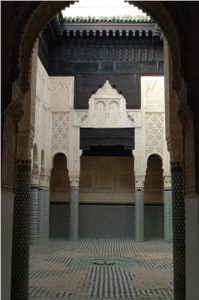
The date of 27th April 1911, marked the first entrance of the French troops to Sale on their way towards Fes. They occupied the gates and the towers at the southern area, and destroyed the ones overlooking the sea and burned its canons before withdrawing to outside the fences.   

During the 19th century, the city of Sale saw some additional urbanisation, the defences at the old Seqala near Sidi Bin Acher shrine were completed in 1885, during the reign of Sultan Hassan I. The lieutenant Mohamed bin Said built around 1977 another fence along the wall towards the river to protect the unsafe sand area as well as the old Musallah. And he opened a gate with the name of “ the gate of the wind“ which was closed during the night. As the city grew bigger in the recent years, the Mussalah was transferred to another place near the cemetery of Bab Lmel’aqa in front of  Abi Abdellah Almejrad shrine. 

What featured perhaps the city then is perhaps the increased number of the new neighbourhoods because of the mass migration from other nearby tribes who settled in uninhabited places such as Bab Chafaa, Bab Sebta, Swiqa and Saff. By the next century, there was already 15 neighbourhoods in the city with sixty mosques but the Friday preach could be delivered only in three of them which are the Great Mosque, Chahbaa and Sidi Ahmed Haji.

Although the number of neighbourhoods had increased, by early nineteenth century, but most of it consisted only of groves  and yards, the number of which reached fort y-two, and was owned by some Slawi families who lived on it usually through direct exploitation.

The beginning of the protectorate era marked the break from the traditional urban system in Salé. As soon as the French took control over the country, they started implementing their views regarding its modernization. They did that with the assistance of the city dignitaries. The first measure they undertook was the establishment of a municipal council in 1913 consisting of four Muslim members, Christians and Jews.

The fist accomplishment of this new institution was the development of infrastructures such as paving the road leading to Rabat and the one beside the military barrack. An unpaved road network built around the city, other roads inside it remained unpaved but were rehabilitated and side-pavements were added. The water canal was also repaired so that water could be transported on top of the arcade wall and be harvested in a basin in Bab Chafaa provided with a hundred of public lighting gas-lamps. In addition, two hospitals were built: one for men and the other one for women. A school for the children of town dignitaries was built in the Bab Hssain neighbourhood in the 1rst of November 1912.


Reference: the book titled “Aspects of the History and Urbanization of Salé from foundation until the beginning of the 20th century“ Mohamed Fatha –2012- the future of salé association.

Festivals

According to researchers, festivals form the modern side of celebration which characterizes people’s life. It is an expression of a desire for communication, and an opportunity to get away from life’s daily problems, and also an expression of opinion with a larger freedom inside the cultural framework. Moreover it is a social bond and shared happiness with the other.

Therefore, Salé commune organizes a number of diverse festivals with the aim of promoting and preserving the local cultural and artistic heritage, and openness to the external world.

Hence the contribution of groups and foreign artists enriches the cultural field and creates intersections to meet ,to exchange ,and to compare the local artistic development with its counterpart in other cultures.

Through many festivals ,the commune creates systematic fixed dates to promote religious, cultural, artistic and educational values. Also, the implementation of the program of festivals in Salé city is a cultural,economic and touristic investment. Therefore, the commune tries to make out of the activities organized on its territory throughout the year a means of local cultural development which is a feeder of local sustainable development.

Child folklore:

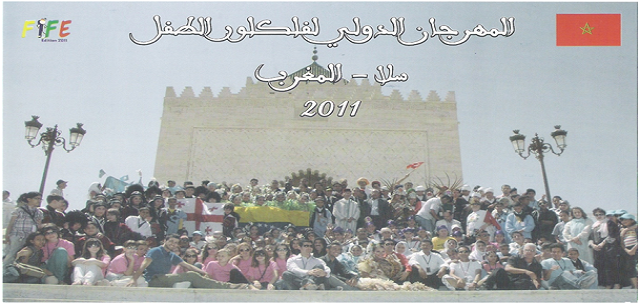
This festival gives the opportunity to children after the end of the school year to live a very rich artistic and educational experience, which enables them to create and revive friendships with children from different world parts. The start of this international festival of child folklore was in 1998,and its first session was set to solidarity with Palestinians through the participation of many children from Palestine.

Women cinema:

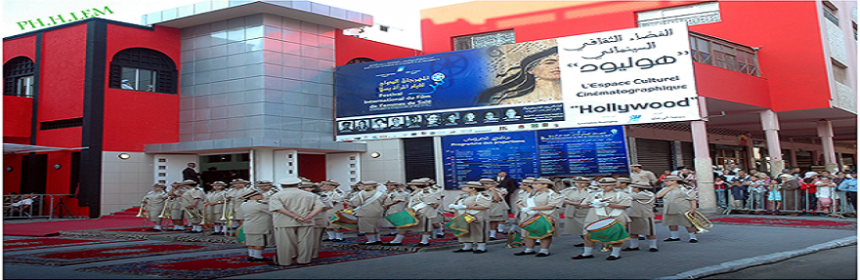
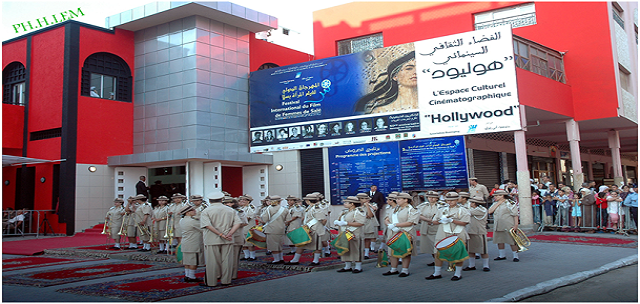
The international festival of women movies in Salé started in 2004 by association Abu Regreg. It is a special occasion of “women cinema”, a different attitude of women and men about issues related to woman through her cinema works.

The general program of each session includes an official competition of long movies honoring the cinema of one of the guest countries of  the festival, together with a number of acts of honoring, certificates, conferences and workshops under the supervision of specialized professionals and other simultaneous activities. An international arbitration committee which includes creative women from the five continents supervises all the movies presented to the official competition to choose the winners of the festival awards.

Pirates” festival:

The festival of “pirates”, which is set for arts of circus and travel, is presented with its different components and activities in many neighborhoods and city avenues. It is organized under the supervision of the association “the pirates” and the Moroccan association to help kids in difficult situations.

The festival contributes in weaving links between history, memory, heritage, architecture and modern creativity. It constitutes a distinguished artistic ceremony which contributes in developing the city and promoting a sustainable artistic policy.

Candles convoy:

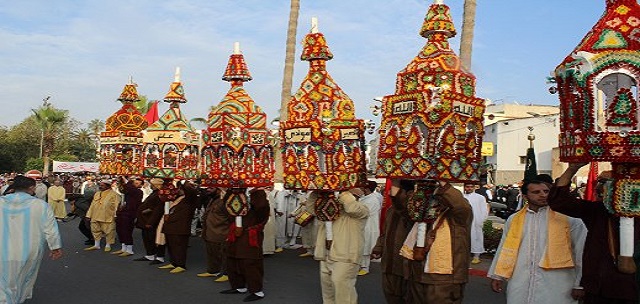
On the 11th of Rabii 1st of every Hijri year, Salé lives a unique artistic and religious festival, it is the festival of candles or what city inhabitants call “candles turn”. It is a carnival on the occasion of the ceremony of the prophet’s birth. Candles have a special position in it. Candles different from the ones we are used to. They have various shapes and colors, and their weight reaches 50kgs. They are made and shaped of frames of wood, and they take the forms of domes or minarets or the like. All this is inspired from the Islamic architecture. So the shapes are decorated with candles and Islamic expressions like “Allah”, “Blessing of Muhammad”…are written on them.

The candles are taken after Asr Prayer (third prayer) on 11th Rabii Al-Awal, starting from the big market near the house of the candles’ maker in an atmosphere of music, singing, hitting drums..and they pass through the important city avenues till the square of martyrs, then to the house of descendents of the holy prophet ,celebrations go on in this way for one week.

The origin of these celebrations goes back to the Saadi king Ahmed Elmansur Adhahbi who was fascinated by the parade of candles he saw in Istanbul before his reign. So he vows if ever he ruled in Morocco, he would make like that show or more. After his accession to throne,he accomplished his promise ,so the first parade of candles took place in 986 Hijri in Sale city ,and this tradition became a characteristic of the city ever since. Hence Salé city has been used to celebrating the ceremony of the Prophet’s birth through the tradition of candles which they hang in the shrine of the righteous pious Ibn Hassoun on the eve of the ceremony and they are kept there for a period of  eleven months. Then one month before the date of the ceremony, they are taken from this shrine to the house of the candles’ maker from the family of Belekbir with the aim of renewing their decoration. Many families followed each other in making these candles like the family of Oubia which appeared 450 years ago, and the families of Elmir , Alhusseini, Elmernissi and Bencheqroon which no longer work in this craft.
The candles of Festival Moulay Abdullah Ben Hassoun are different from other ones. Their frames are made of thick wood in the form of minarets of mosques covered with white paper and decorated with flowers made of wax with various colors, white, red, green and yellow, in an architectural form similar to a beehive and which adopts the magnificent Islamic art.

The festival of candles, which is organized under the patronage of his majesty starts with the show of   the convoy of candles which crosses some Salé avenues in the direction of the shrine of Moulay Abdullah Ben Hassan. At night, it is followed by an original traditional celebration “the dance of the candle” with Andalusian music. After that comes the lighting of candles with music tones.  

The festival starts after the Asr (3rd prayer) of the day preceding El eid. The convoy meets near the house of the candles’ maker led by the chief of Hssouni corner (zawiya), then “El Tabjia” with their traditional dressing, they cross the city streets carrying candles and accompanied by Sufi and other musician groups.

The convoy crosses the important city avenues passing by Martyrs square (Bab Bouhaja) where the official platform is, to finish its course to the house of the descendents of the holy prophet to organize a traditional celebration much appreciated especially by women and children.

Yet, the end of the show of the convoy of candles does not mean the end of the festival. So after the circuit, a dinner ceremony is made for which all the participants from the noble descendents , women and children alike, are called to join Zawiat Moulay Abdullah Ben Hassan, to finish “The candles dance” with the tones of Andalusian music, and recitations prasing the prophet are sung thereafter.

1 35 36 37 38